Page 1
Y O U R N O . 1 S O U R C E F O R T H E L AT E S T H O S P I TA L I T Y I N S I G H T S I N T H E M I D D LE E A S T SEPTEMBER 2026 | HOTELANDCATERING.COM WHAT GUESTS WANT. WHAT TOMORROW NEEDS The Sustainability issue
Hotel & Catering
Page 1 / 68
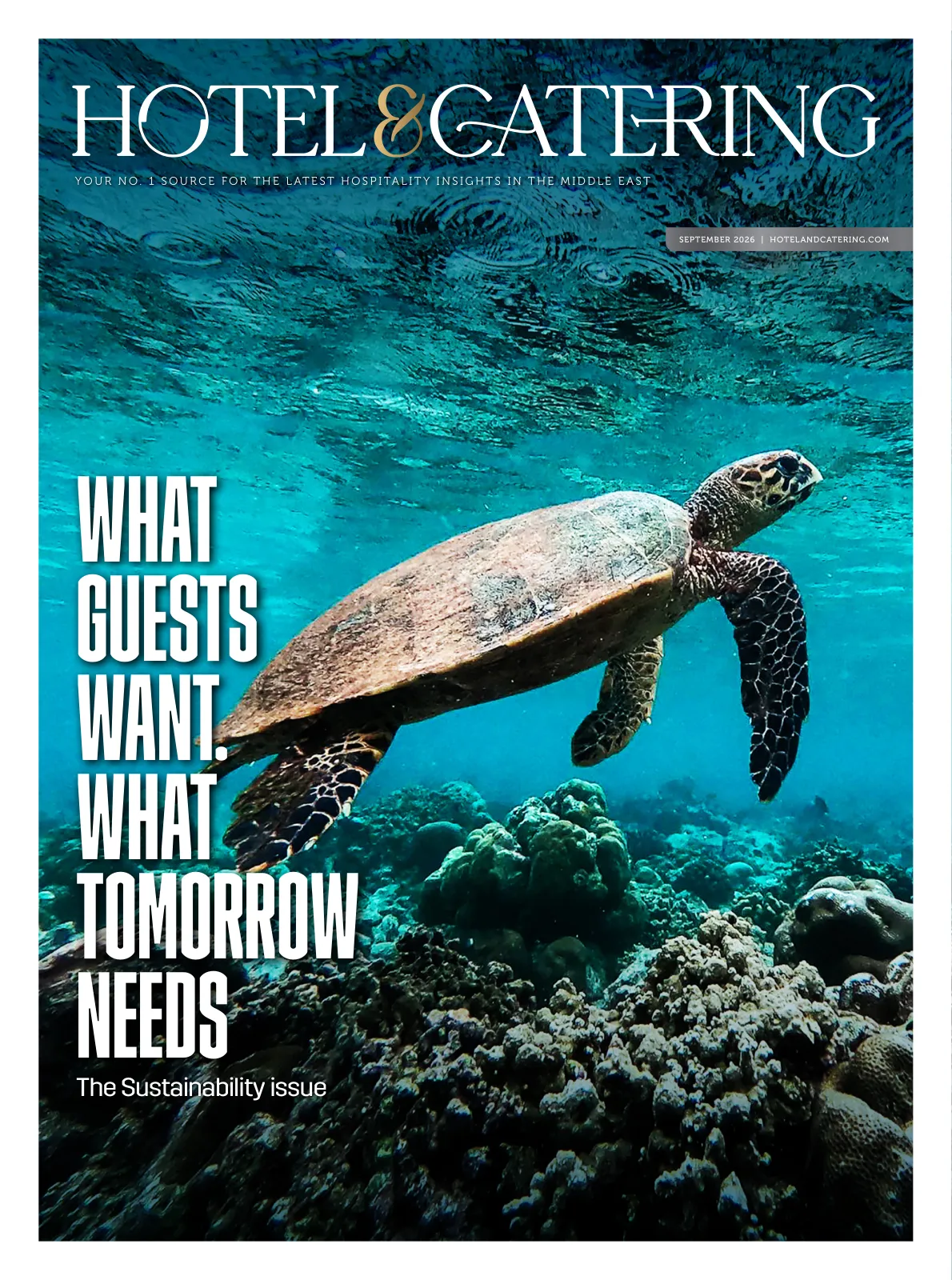
Y O U R N O . 1 S O U R C E F O R T H E L AT E S T H O S P I TA L I T Y I N S I G H T S I N T H E M I D D LE E A S T SEPTEMBER 2026 | HOTELANDCATERING.COM WHAT GUESTS WANT. WHAT TOMORROW NEEDS The Sustainability issue
Eywa Way of Water is a state-of-the-art residential community with only 65 exceptional waterfront residences, with a holistic wellness ecosystem, curating authentic experiences and best-in-class amenities few have dreamed of. Contact us today: +971 54 308 6000 I sales@byrevolution.com E Y W A . A E E V E R Y T H I N G T H AT O N E C O U L D I M A G I N E F O R E X T R A O R D I N A R Y L I F E
© Artcoustic / Avanti Groupe / Afrikatoon On Arabsat Badr 26° East by Kids’ TV Break in French More info:
ALWAYS MORE TO DISCOVER News, cinema, documentaries, sport, cartoons... Every family member’s show “en français” for free Subtitled in Arabic
6 SEPTEMBER 2026 | HOTELANDCATERING.COM IN THIS ISSUE BEYOND THE GREEN BADGE At Al Jaddaf Rotana Complex, sustainability is moving beyond pledges and certifications, with measurable cuts in energy use, zero waste to landfill at one property and operational changes happening across three Dubai hotels PARADISE, WITH PURPOSE A fresh chapter of island life that puts nature and experience first 60 24 Contents 60 BEYOND THE GREEN BADGE At Al Jaddaf Rotana Complex, sustainability is moving beyond pledges and certifications, with measurable cuts in energy use, zero waste to landfill at one property and operational changes happening across three Dubai hotels 64 THE PROMISE OF CONSISTENCY As an industry built around guest experience, even relatively small disruptions can affect the way that experience is delivered 34 WHEN "BOOK NOW" ISN'T WORKING How to rethink social media in a soft market 46 SUSTAINABILITY INNOVATION AWARDS 2026 WINNERS The winners of the Sustainability Innovation Awards 2026 were announced on 1 September at Sofitel The Palm, Dubai, during an evening dedicated to the people, projects and ideas advancing sustainability across the Middle East 56 DINING HAS ENTERED ITS SELECTIVE ERA Dubai’s restaurant market is becoming harder to impress. With guests paying closer attention to value, consistency and what a concept actually offers, simply being expensive, beautiful or new is no longer enough 38 BUILT FOR GUESTS, DESIGNED FOR GOOD Meeting today’s expectations without compromising tomorrow
8 SEPTEMBER 2026 | HOTELANDCATERING.COM SUBSCRIBE Contact subscriptions@bncpublishing.net to receive Hotel & Catering every issue CEO Wissam Younane wissam@bncpublishing.net MANAGING DIRECTOR Rabih Najm rabih@bncpublishing.net EDITOR-IN-CHIEF Seymone L Moodley seymone@bncpublishing.net MARKETING & COMMUNICATION LEAD Aaron Joshua Sinamban aj@bncpublishing.net DIGITAL EDITORIAL SUPPORT Karan Moodley karan@bncpublishing.net COUNTRY MANAGER Amjad Fakhouri amjad@bncpublishing.net PHOTOGRAPHY Joel Amparo MULTIMEDIA Eduardo Buenagua CREATIVE LEAD Christian Harb chriss@bncpublishing.net PO Box 502511 Dubai, United Arab Emirates P +971 4 4200 506 | F +971 4 4200 196 For all commercial enquiries related to Hotel & Catering News ME, contact sales@bncpublishing.net All rights reserved 2026. Opinions expressed are solely those of the contributors. Hotel & Catering is officially licensed exclusively to BNC Publishing in the MENA region. No part of this magazine may be reproduced or transmitted in any form or by any means without written permission of the publisher. Printed by United Printing and Publishing | upp.ae Images used in Hotel & Catering are credited when necessary. Attributed use of copyrighted images with permission. Hotel and Catering News ME HotelCateringME Hotel & Catering News Middle East hotelcateringme In addition to our print edition, we’re bringing you all sorts of industry news on our web mediums. We’re looking forward to interacting with our readers on all of our social media and web platforms. See you on the web! CREDITS
10 SEPTEMBER 2026 | HOTELANDCATERING.COM CONTRIBUTORS Contributors 01 02 03 XIAOHUI SHI (ANGEL), Operations Manager, Sarood Hospitality “What feels different now is how quickly all of those pressures can arrive, often at the same time.” AJ RAZEK, CEO and Founder, Rize Group “As the market continues to mature, concepts will need to be more disciplined about who they are serving and what they stand for.” DR. NAIM MAADAD, Chief Executive and Founder of Gates Hospitality “We need to look beyond individual disciplines and consider how decisions made at every stage ultimately affect the guest, the operator and the longevity of a project.” Hospitality Voices This Month
12 SEPTEMBER 2026 | HOTELANDCATERING.COM EDITOR’S NOTE H&C From the Back Seat A few years ago, I was in a taxi leaving a very well- known sustainability event. I got in, said hello to the driver, a polite man from Asia, and we started talking. He asked me what was happening at the venue. He had been making pick-ups and drop-offs there all day, which was great for business, but he was curious. I suppose he decided I would be the person he asked. I appreciated that curiosity, so I explained. It was an important global event, I told him. Powerful people had come from all over the world to talk about climate change, the environment and what we could collectively do to protect the planet. He looked at me and asked, “What is climate change?” I was stunned for a second. Not because he didn’t know what it was, but because I had just assumed that he did. The earth is not in the best shape, you see. The more we advance, the more we want and the more we take. We use more than we need, consume more than we should and place more pressure on the planet in the process. It is taking a toll, and now we have to find better ways of living, building and operating so we do not continue making the damage worse. “Does that make sense?” I asked. “Ah, okay, okay. I get it now,” he said. There was a short pause before he spoke again. “You know, ma’am, I don’t really care about this.” “You don’t care about climate change?” I asked, probably with more judgement in my voice than I would like to admit. “Yes, ma’am. I don’t want anything bad to happen to the planet or to anyone. But me and my family, we don’t own much. We use the bare minimum. I worry about making enough to take care of my family. That is my biggest concern every day.” And there it was. “Right. Of course. I understand,” I said. Then I sat all the way back in my seat and thought about that conversation for the rest of the drive home. Our problems, just like our privileges, are different. For many of us reading this note, having the time, resources and mental space to think seriously about sustainability is itself a privilege. It is a concern we can afford to have while millions of people are occupied with much more immediate questions, Can I feed my family? Can I pay the rent? Will I make enough today? That does not make sustainability any less urgent. If anything, it makes our responsibility greater. And we should not take that privilege for granted. Sustainability is everyone’s problem, and it is not a competition over who is doing the most or who is doing it best. The more useful question is much simpler, are we doing something? Sometimes that something is a major investment, a new policy or better design. Sometimes it is simply thinking a little longer about where that plastic will end up before buying something we probably do not need. And sometimes, it begins with one honest conversation between two people trying to understand each other, whether on a global stage or in a taxi on the way home. SEYMONE L MOODLEY EDITOR-IN-CHIEF seymone@bncpublishing.net Seymone Leigh Moodley seymonemoodley SUSTAINABILITY
ODE TO BAG END Limited Edition Make every epic writing journey a cosy one. Hobbiton handcraft from the makers of the world’s most magical pens. ©���������������������������������������������������������������������������������������������������������������������� �������������������������������™�����������������������������������������������������������������������������������
OPENINGS & LAUNCHES H&C WYNN AL MARJAN ISLAND INTRODUCES TOWNHOMES ACCOMMODATIONS Wynn Al Marjan Island, the world’s most anticipated destination resort, today announced Townhomes, one of the resort’s most exclusive accommodation offerings, located within Enclave, Wynn Al Marjan Island’s boutique hotel. Evocative of the great aristocratic urban mansions found in Paris (hôtels particuliers), they are positioned at the very heart of the resort. Arrived at through the Royal Foyer, they offer immediate access to the wider destination while remaining architecturally and experientially removed, creating a rare sense of privacy at the center of it all. They will be available by exclusive reservation only.
15 HOTELANDCATERING.COM | SEPTEMBER 2026 OPENINGS & LAUNCHES This December, Atelier Kū will open its doors on the 15th floor of Emirates Financial Towers in DIFC, introducing an intimate new destination where haute cuisine, mixology, design, sound and service come together as one singular experience. Atelier Kū is conceived as two distinct worlds connected by one creative heart: a luminous 45- seat haute cuisine restaurant and a darker, intimate Hi-Fi bar, with the open Atelier working between them. ATELIER KŪ TO OPEN IN DIFC, BRINGING HAUTE CUISINE AND HIGH-FIDELITY SOUND TOGETHER UNDER ONE ROOF
16 SEPTEMBER 2026 | HOTELANDCATERING.COM OPENINGS & LAUNCHES H&C Minor Hotels, a leading global hotel owner and operator, has announced Avani Cypress Lakes Resort, a premium lifestyle and wellness resort set to launch in phases from October 2026 in New South Wales’ Hunter Valley. The development will bring together the existing Oaks Cypress Lakes Resort and adjoining Elysia Wellness Retreat across 340 acres, creating what will become Australia’s largest integrated resort wellness precinct. MINOR HOTELS TO LAUNCH AUSTRALIA’S LARGEST INTEGRATED RESORT WELLNESS PRECINCT AT AVANI CYPRESS LAKES
17 HOTELANDCATERING.COM | SEPTEMBER 2026 OPENINGS & LAUNCHES JW MARRIOTT MARQUIS DUBAI INTRODUCES AURŌM, A TRANSFORMATIVE BOTANICAL BEVERAGE LAB OPENING THIS SEPTEMBER Located in the heart of Business Bay, JW Marriott Marquis Hotel Dubai is undergoing a property-wide enhancement project, with Aurōm set to open this September as one of its most distinctive new con- cepts. A transformative botanical beverage lab and specialty coffee destination, Aurōm brings together botanical science, precision coffee and immersive hospitality to offer a new take on the non-alcoholic beverage experience. Created in collaboration with The Herball and in- ternationally acclaimed botanical innovator Michael Isted, the concept brings a new kind of social space to Dubai, where connection, creativity and well-being are cultivated through carefully crafted drinks, immer- sive rituals and innovative techniques.
NEWS & APPOINTMENTS H&C Jannah Hotels & Resorts has announced the appointment of Amer Ammar as Director of Commercial Strategy & Development, further strengthening the group’s executive leadership. Amer brings more than 25 years of hospitality experience across the UAE and wider Middle East, in senior leadership positions within multi-property and new opening hotel environments. Throughout his career, he has combined operational leadership with direct responsibility for revenue strategy, sales, pricing and distribution, building a comprehensive understanding of the commercial and operational drivers of hotel profitability and long-term value. JANNAH HOTELS & RESORTS APPOINTS AMER AMMAR AS DIRECTOR OF COMMERCIAL STRATEGY & DEVELOPMENT
19 HOTELANDCATERING.COM | SEPTEMBER 2026 NEWS & APPOINTMENTS Pullman Dubai Downtown has announced the appointment of Alfio Bernardini as its new general manager. Bernardini brings extensive hospitality experience across luxury and upscale hotels in the UAE, Europe and the Indian Ocean, with his fluency in Italian, English, German and French supporting an international career that has included senior leadership positions within Accor and other leading international hospitality brands. ALFIO BERNARDINI APPOINTED AS GENERAL MANAGER OF PULLMAN DUBAI DOWNTOWN
20 SEPTEMBER 2026 | HOTELANDCATERING.COM NEWS & APPOINTMENTS H&C Global Partners, as part of their second flagship real estate fund, has entered into agreement with the renowned Marriott International to develop two residential projects in Dubai Creek – an announcement that marks a major milestone in one of the city’s most celebrated waterfront districts. The agreement was formalised at the sales centre of OCTA Properties – the official sales and marketing partner for the projects – signaling a new chapter for both organisations. GLOBAL PARTNERS LTD ANNOUNCES TWO BRANDED RESIDENTIAL PROJECTS IN COLLABORATION WITH MARRIOTT INTERNATIONAL AT DUBAI CREEK
NEWS & APPOINTMENTS Gymkhana, the two-Michelin-starred restaurant from London’s JKS Restaurants, has opened reserva- tions ahead of its highly anticipated UAE debut. Lo- cated in Gate Village, Building 7, DIFC, the acclaimed restaurant brings its Indian cuisine, heritage and hospitality to Dubai for the first time. Gymkhana Dubai’s kitchen will be led by Execu- tive Chef Rahul Rana, under the guidance of Global Culinary Director Chet Sharma, and JKS Co-Founder and Creative Director Karam Sethi. Like London, the menu draws inspiration from the rich culinary tradi- tions of North India, complemented by influences from the South and West, with bold, layered flavours rooted in tradition. The menu is divided into Nashta, Kebabs & Tikkas, Game & Chops, Curry & Biryani, and Sabzi. ACCLAIMED GYMKHANA OPENS IN DUBAI
BUILT FOR MOMENTS THAT MATTER EXTRAORDINARY Escape to a home where urban sophistication meets resort tranquility. PRIVATE POOLS | 30+ AMENITIES | PRIME LOCATIONS 800-SAMANA | WWW.SAMANADEVELOPERS.COM
DISCOVER REFINED living *Ranking as per the H2025 1 sales volume data of property monitor for Dubai
24 SEPTEMBER 2026 | HOTELANDCATERING.COM CHAIN & GROUP FOCUS H&C PARADISE, WITH PURPOSE A fresh chapter of island life that puts nature and experience first
25 HOTELANDCATERING.COM | SEPTEMBER 2026 PARADISE, WITH PURPOSE “The Maldives has never needed much help being beautiful.
26 SEPTEMBER 2026 | HOTELANDCATERING.COM CHAIN & GROUP FOCUS H&C T here are places you visit for what has been built, and others you remember for what has been left untouched. On the natural island of Fonimagoodhoo, NH Collection Maldives Reethi Resort is beginning a new chapter that brings together thoughtful design, remarkable marine life, good food, considered wellness and a lighter approach to island living. The Maldives has never needed much help being beau- tiful. The water already does impossible things with the colour blue. The beaches need little introduction. Be- neath the surface, reefs are alive with marine life, while evenings arrive slowly enough to make watching the sun disappear feel like a legitimate plan. Perhaps the harder task for any resort here is knowing when to intervene and when to simply let the island speak for itself. Following an extensive refurbishment and rebrand, NH Col- lection Maldives Reethi Resort has returned to Fonimagood- hoo in Baa Atoll with 105 renewed beach and overwater villas, refreshed restaurants and bars, family facilities, recreation spaces and a renewed wellness offering. Yet one of the more interesting aspects of the refurbishment is what it has tried not to disturb. In a destination where the landscape is the attraction, de- velopment has to tread carefully. Located within a UNESCO
27 HOTELANDCATERING.COM | SEPTEMBER 2026 PARADISE, WITH PURPOSE Biosphere Reserve, the resort says sustainable construc- tion materials were incorporated into the refurbishment, while efforts have also been made to minimise waste across operations. A newly planted garden supplies herbs and vegetables to the kitchens and fresh flowers to the villas, encouraging greater self-sufficiency while keeping the property closely connected to the island on which it sits. The result is a resort that feels refreshed without appear- ing disconnected from its surroundings. The villas follow much the same philosophy. Rather than competing with the colour outside, interiors are deliberately calm. Warm neutrals, timber and bamboo create an understated backdrop, while open-air showers and generous views keep the landscape constantly present. The thatched-roof beach villas open directly onto the sand and sit within easy swimming distance of the house reef, with configurations suited to couples as well as families. At the more private end of the spectrum, the 150 sqm Reethi Suite occupies a secluded stretch of beach, with its own pool and views towards the open ocean. Then there are the 30 overwater villas, curving around the island’s northern tip and looking out over open water. Their interiors incorporate work created by the resort’s own artisans using recycled materials, another small example of the refurbishment looking to what the island already has rather than simply bringing everything in from elsewhere. None of these details are presented as grand gestures. That is perhaps why they work. Sustainability in a place like the Maldives is inseparable from the guest experience. Protecting the environment is also protecting the very thing people have travelled thou- sands of kilometres to see. And in Baa Atoll, some of the most compelling reasons to visit are underwater. Just offshore, the house reef is home to angelfish, clown- fish, reef sharks and sea turtles. Guests can explore further through scuba diving and freediving, while catamaran sail- ing, kayaking and other water sports make the surround- ing Indian Ocean part of the resort itself.
28 SEPTEMBER 2026 | HOTELANDCATERING.COM CHAIN & GROUP FOCUS H&C Around 15 minutes away is Hanifaru Bay, known for seasonal gatherings of manta rays and whale sharks. It gives Reethi something no amount of programming could manufacture. The spectacle is already here. That also makes the resort’s location inside a protected biosphere more than an attractive line in a brochure. The health of the surrounding marine environment is fundamental to the experience it is selling. Eight reasons to stay for dinner Food is where the resort becomes noticeably more play- ful. There are eight restaurants and bars across the resort, each given enough personality to make moving around the island part of the experience. Herbs and vegetables are picked from the Reethi Garden, while fresh fish and seafood are sourced from local fishermen. Jumla is the all-day dining hub, with live cooking stations and menus moving between Mediterranean, In- dian and Maldivian influences. Nearby, Caravella takes things in the opposite direction, offering an intimate fine dining experience in a wine cellar, where the chef’s menu is paired with rare vintages. Alifaan moves dinner onto the beach, where steaks, local seafood and garden vegetables meet an open fire beneath the palms. Kaiyo sits above the lagoon with ocean views in every direction. Its Asian-inspired menu is built for sharing, moving between bao buns, spring rolls, satay and sushi in a setting that manages to feel casual enough for an unplanned lunch and special enough for an occasion. Elsewhere, Madumaithiri keeps things relaxed beside the infinity pool, while Atardecer occupies the island’s
29 HOTELANDCATERING.COM | SEPTEMBER 2026 PARADISE, WITH PURPOSE western edge, where tapas and cocktails accompany the sunset before DJ sets and fire performances carry the evening forward. Handhuvaru provides one of the resort’s more unu- sual stories. The intimate rum bar includes a variety aged on site in a cask submerged beneath the ocean. And when even a restaurant feels too ordinary, Adrift takes dinner elsewhere entirely. A secluded sandbar, a moonlit beach or the privacy of a villa ter- race can become the dining room for the evening. Wellness, Island Style Reethi’s approach to wellness is similarly relaxed. REVIVE Spa & Wellness sits within a tropical garden, drawing on Eastern therapies and natural Maldivian ingredients. Its signature Maldivian De- light treatment leans into perhaps the island’s most familiar ingredient, combining a coconut scrub with a virgin coconut oil massage, followed by coconut sorbet. The Couples Ritual adds a shared massage and a milk and coconut bath overlooking the garden. The wider menu includes magnesium-based treat- ments, Ayurvedic techniques, Crystal Chakra Heal- ing, Himalayan Thermal Therapy and Elemis facials. But there is no requirement to turn a holiday into a wellness programme. Guests can move between beach volleyball, tennis, badminton, pickleball and the gym, or choose yoga, sound therapy and guided meditation in the garden or on the beach. Wellness here can mean movement. It can mean stillness. It can also mean doing absolutely nothing for several hours while staring at the ocean. All three count.
30 SEPTEMBER 2026 | HOTELANDCATERING.COM CHAIN & GROUP FOCUS H&C The View From Inside Reethi Behind the villas, restaurants and postcard views is the considerably more complicated job of running a remote island resort. Hotel Manager Melroy Steve Fernandes talks GCC travellers, changing expectations, the people behind Reethi and what luxury hospitality looks like in 2026. The Middle East has become one of the strongest outbound markets for luxury island destinations. How im- portant is the region for NH Collection Maldives Reethi Resort? Following our rebranding, the GCC has become one of our key strategic growth markets. Our enhanced resort offering, including more private villa experiences, elevated butler service and family-friendly facilities, aligns well with the expectations of GCC travellers, who value privacy, person- alised service and quality family time. Through targeted partnerships, strong relationships and tailored guest experiences, our ambition is to position the GCC among our top five source markets and establish NH Collection Maldives Reethi Resort as a preferred destination for travellers from the region. How do guest expectations from the GCC differ from other international markets? Guests from the GCC generally place a strong emphasis on personalised rec- ognition, privacy, flexibility and high service standards. While every guest is unique, many also appreciate spacious villas, family-friendly experiences and culinary diversity. Our role is to anticipate prefer- ences rather than simply respond to requests, creating a seamless and memorable island journey. What role does the UAE play as a key feeder market for the resort? The UAE remains one of our key gate- way markets thanks to its excellent connectivity and sophisticated luxury travel segment. Guests travelling from Dubai and Abu Dhabi often seek short luxury escapes as well as extended family holidays, making the UAE an important contributor to our business. We continue to work closely with our partners in the region to strengthen this market even further. How do you tailor the guest journey for travellers accustomed to the high service standards of Dubai, Abu Dhabi, Doha and Riyadh? Guests from the GCC are accustomed to some of the world’s finest hospi- tality, where excellence is simply expected. Our approach is to comple- ment those expectations with the unique charm of the Maldives. From personalised pre-arrival com- munication and intuitive service to culinary flexibility and genuine human connection, every interaction is designed to feel natural rather than scripted. Luxury today is no longer de- fined by formality alone. It is defined by authenticity, consistency and how we make our guests feel throughout their stay.
PARADISE, WITH PURPOSE MELROY STEVE FERNANDES, HOTEL MANAGER
32 SEPTEMBER 2026 | HOTELANDCATERING.COM CHAIN & GROUP FOCUS H&C Food and beverage has become a major part of resort storytelling. How would you describe the dining experi- ence at NH Collection Maldives Reethi Resort? Food and beverage is one of the strongest storytelling elements of our resort. With eight distinctive F&B outlets, every restaurant offers its own personality and experience, allowing guests to discover something different through- out their stay. Whether enjoying the journey through the Age of Discov- ery at Caravela or freshly barbecued seafood by the ocean at Atardecer, every meal is complemented by the beauty of our island surroundings. Our aim is simple: to ensure every dining experience be- comes one of the lasting memories guests take home with them. What role do local flavours, island produce and Maldivian culture play across the resort’s culinary offering? While our cuisine celebrates international flavours, we are equally passionate about showcasing the richness and authenticity of the Maldives. Whenever possible, we incorporate fresh local seafood, island-inspired dishes and regional ingredients into our menus, complemented by herbs and spices grown in our own Reethi Garden. Beyond the cuisine itself, we believe true authenticity comes from our people. The warmth of Maldivian hospi- tality, together with our local flavours and stories, creates a deeper connection to the destination, allowing guests to leave with not only memorable dining experiences but also a genuine taste of the Maldives. What does it take to run a successful island resort be- hind the scenes? Running a successful island resort is about balancing me- ticulous planning with genuine hospitality. Every arrival, every delivery and every guest experience requires careful coordination because of our remote location. Behind every memorable holiday is an incredible team working together with one shared purpose: to consistently deliver exceptional experiences. Success is built on teamwork, adaptability and an unwa- vering commitment to excellence, even in the smallest details. How do you keep a resort team motivated when they are living and working in such a remote environment? Living and working on a remote island presents unique challenges, so creating a genuine sense of community is essential. We are focused on building an environment where people feel supported and encouraged to grow both personally and professionally. Recognition, learning opportunities and teamwork all play an important role in maintaining motivation. It is not always easy, but culture is built one day at a time through consistency, trust and leading by example. Hospitality in the Maldives depends heavily on service culture. What qualities do you look for in your team? Technical skills can always be taught, but attitude, humil- ity, integrity and genuine care for others are qualities that define exceptional hospitality professionals.
PARADISE, WITH PURPOSE We look for individuals who take pride in creating memo- rable experiences, embrace continuous learning and believe in supporting one another as one team. When people genuinely care about each other, that care naturally extends to our guests. What has been one of your proudest moments with the team so far? One of my proudest moments has been seeing our team come together during the reopening of NH Collection Maldives Reethi Resort. Standing alongside the team on opening day as we unveiled our first bottles of rum matured beneath the Indian Ocean was a milestone that symbolised months of dedication, planning and belief in a shared vision. Another unforgettable moment was launching our Cara- vela storytelling experience, watching colleagues from every department bring the legend to life and seeing guests become part of the journey rather than simply spectators. Hospitality has always been, first and foremost, about people. These moments reminded me that while beauti- ful resorts attract guests, it is the passion, creativity and teamwork of our people that transform a beautiful island into unforgettable memories. How is demand for the Maldives evolving in 2026? The Maldives continues to evolve as one of the world’s most desirable luxury destinations. While global travel pat- terns remain dynamic and guests are increasingly planning their holidays with greater value awareness, the appeal of the Maldives remains exceptionally strong. We are also seeing travellers seeking more than just beautiful surroundings. They are looking for authentic experiences, personalised service, wellness and meaningful connections with the destination. Resorts that continue to innovate while delivering genuine hospitality will be well positioned for long-term success. Which source markets are becoming more important for the resort? Our traditional European markets continue to be extreme- ly important to the resort, while the GCC remains one of our key strategic growth markets thanks to its excellent connectivity and growing demand for luxury leisure travel. We also continue to see encouraging opportunities across selected Asian markets, supported by improved air con- nectivity and changing travel patterns. Our objective is to maintain a balanced international mar- ket mix, allowing us to respond to evolving guest prefer- ences while strengthening long-term business resilience. Come together, or disappear Perhaps one of Reethi’s strongest qualities is that it does not insist on one version of a Maldivian holiday. There are couples looking for privacy and families wanting room to play. Children have an expanded kids’ club with indoor and outdoor play areas and a shaded family pool. There are guests who will spend most of the trip underwa- ter, others who will plan their days around dinner reser- vations and some whose only ambition is to finish a book beneath a palm tree. The island accommodates all of them without losing its sense of intimacy. Even getting there retains some of the theatre that makes a Maldivian holiday feel distinct. Reethi is around 35 min- utes from Malé by seaplane. Alternatively, guests can take a domestic flight to Dharavandhoo Airport followed by a 15-minute speedboat ride to the island. And perhaps that final stretch of water matters. Because the appeal of somewhere like Reethi is not simply arriving at a beautiful resort. It is the feeling that some- thing has been left behind. The airport. The traffic. The meetings. The notifications. The obligation to make every minute productive. What remains is an island, a reef, a villa, somewhere good to eat and an ocean stretching far beyond all of it. NH Collection has given Reethi a new chapter, but the most important decision may have been understanding that a place this naturally extraordinary does not need to be completely reinvented. It needs to be looked after.
34 SEPTEMBER 2026 | HOTELANDCATERING.COM POINT OF VIEW H&C
35 HOTELANDCATERING.COM | SEPTEMBER 2026 WHEN "BOOK NOW" ISN'T WORKING When hotel demand softens, something predict- able happens on social media. The selling gets louder. More offers appear. Stay three nights, pay for two. Complimentary breakfast. Room upgrades. Resident rates. Brunch packages. Spa offers. Kids stay free. I understand the instinct. Empty rooms and restaurant tables create pressure to generate business, and social media provides an immediate channel to promote whatever offer the commer- cial team has put together. There’s just one tiny problem: If someone isn't travelling to the Middle East because they are uncertain about the region, another 20% off probably isn't going to change their mind. That distinction matters. There is demand you can convert today, and there is demand that simply isn't ready to convert. Treating both audi- ences the same is where social media strategies start to go wrong. Stop treating every post as an advertisement Travellers increasingly discover destinations, ho- tels and restaurants while scrolling, long before they reach a hotel website or OTA. Inspiration, research and booking no longer follow a neat se- quence. Someone might see a hotel on Instagram today, forget about it for three months and search for it when they eventually start planning. For hotels, this means social media matters even when it doesn't generate a reservation today. Someone watching a video from your property in August may have no intention of visiting Dubai, Doha or Riyadh next month. Six months from now, circumstances may be different. The ques- tion is whether they remember you. That changes the content. Show the breakfast people will remember, the view they will want to wake up to, the bartender they will want to meet, the neigh- bourhood they hadn't heard of and the small details that make the property recognisable. Individuality matters here. A feed of immaculate bedrooms, infinity pools, beautifully plated food and sunsets may look impressive, but after a while one luxury property begins to resemble another. WHEN "BOOK NOW" ISN'T WORKING BY MARTIN KUBLER, CHIEF SLOTH AT THE GLUTTONOUS SLOTH, HORECA CONSULTING WITH ATTITUDE HOW TO RETHINK SOCIAL MEDIA IN A SOFT MARKET
36 SEPTEMBER 2026 | HOTELANDCATERING.COM POINT OF VIEW H&C Sometimes success is making someone think: When I even- tually go, I'd like to stay there. Show normality without insisting everything is normal One of the more difficult challenges for destinations af- fected by regional uncertainty is perception. A potential visitor thousands of kilometres away may have little understanding of the geographical distinction between an incident they have seen on the news and the destination they were considering visiting. Hotels cannot control that perception. Trying too hard to correct it can even have the opposite effect. Posts insisting that everything is safe, open and completely normal risk reminding people that they were worried in the first place. There is another option: show ordinary life. Show breakfast being served, guests around the pool, a chef preparing dinner, people meeting over coffee, staff setting up for an event or what is happening in the neighbourhood. There is no need to tell people that life continues. Let them see it. Sell to the people who are there If fewer long-haul travellers are arriving, social media should also reflect the customers who remain avail- able: residents, domestic travellers, regional visitors, corporate communities and people already in the destination. For restaurants, the case is even stronger. A restaurant cannot social-media-market its way into more inbound flights, but it can give someone living ten minutes away a reason to come for dinner tonight. Local relevance comes from recognising how people actually live: the after-work dinner, the late breakfast, the family gathering, the coffee between meetings or the meal nobody feels like cooking at home. The audience has changed. The content should change with it.
37 HOTELANDCATERING.COM | SEPTEMBER 2026 WHEN "BOOK NOW" ISN'T WORKING Become useful before the guest arrives People increasingly use social platforms as search tools. That should influence what hospitality busi- nesses publish. A polished video of a hotel suite may generate views. A video explaining three things to do in Doha when it's 42°C outside answers a question someone may actually be asking. The same applies to content explaining what Friday brunch is really like, where to run near the hotel before sunrise, how to spend a long airport layover, or what visitors should expect during Ramadan. This makes the hotel useful before the customer has bought anything and demonstrates something generic promotional content struggles to convey: local knowl- edge. Independent properties and restaurants may not have the media budgets of international brands, but they can know their neighbourhood better. Measure what social media actually influences Imagine a traveller watches your Reel in August and saves it. In January, they search for your hotel by name, check the reviews and eventually book through an OTA. Which channel created the customer? Traditional attribution may give social media little credit, despite it starting the process. Hotels therefore need to look beyond followers, likes and direct social conversions. Saves, shares, branded search, direct website traffic and engagement from target markets can all help show whether social media is getting the prop- erty into someone's consideration set. The measurement won't be perfect. Neither is the cus- tomer journey. Don't disappear when demand does There is an understandable temptation to judge marketing by what can generate revenue right now, particularly when trading conditions are difficult. Some social activity absolutely should do that. Hotels still need offers. Restaurants still need covers. Commercial teams still need campaigns that convert. But weak demand doesn't automatically call for louder selling. Sometimes social media's most valuable job is maintaining familiarity, creating desire, demonstrating normality and being useful until the customer is ready. When "Book Now" isn't working, posting it more often isn't much of a strategy. The better question is what you want people to think, feel or remember until they are ready to book again. “There is an understandable temptation to judge marketing by what can generate revenue right now, particularly when trading conditions are difficult.
38 SEPTEMBER 2026 | HOTELANDCATERING.COM EVENT H&C BUILT FOR GUESTS, DESIGNED FOR GOOD MEETING TODAY’S EXPECTATIONS WITHOUT COMPROMISING TOMORROW
39 HOTELANDCATERING.COM | SEPTEMBER 2026 BUILT FOR GUESTS, DESIGNED FOR GOOD What does it mean to design for the future when expectations are changing almost as quickly as the spaces being created? That question sat at the heart of Built for Guests, Designed for Good, a conversation bringing to- gether hospitality, architecture, interior design, development and food supply to examine what sustainability looks like when it moves beyond ambition and into the realities of creating, oper- ating and evolving physical spaces. Moderated by Dr. Naim Maadad, Chief Execu- tive and Founder of Gates Hospitality, the panel featured Rachid Bakas, General Manager of Anantara Retreat Santorini Abu Dhabi; Sejal Patel, Senior Design Director at Kristina Zanic Consultants; Henrique Dias, Principal & Middle East Hospitality & Mixed-Use Director at DLR Group; Mariska Stoffel, Director of Design & Development at R.Evolution; and Maikel Cooke, Commercial Manager at JM Foods LLC. The perspectives were deliberately varied. Because sustainability is no longer the respon- sibility of one person, department or stage of a project. Decisions made by developers and architects affect designers. Design decisions affect operators. Operational demands influence sourcing, procurement and supply chains. And ultimately, all of those choices affect the person using the space.
40 SEPTEMBER 2026 | HOTELANDCATERING.COM EVENT H&C Start earlier Perhaps one of the most important shifts in sustainable development is recognis- ing that many of the decisions with the greatest long-term impact happen before construction even begins. For firms like R.Evolution, that means considering sustainability alongside engineering, wellness, technology and resilience from the earliest stages of a project. It is considerably harder to retrofit responsible thinking into a development once the fundamental decisions have already been made. Orientation, materials, systems, adapt- ability and the relationship between a building and its environment can determine how efficiently it performs for decades. The challenge is ensuring those ambitions remain intact as a project moves from concept through budgets, procurement, construction and eventual operation. It also requires expanding what we mean by sustainability. Reducing environmen- tal impact is important, but increasingly the conversation includes the effect buildings have on human wellbeing, communities and the environments around them. The question is shifting from simply “How do we do less harm?” to “Can the spaces we create actually contribute something positive?” Throughout the discussion, modera- tor Dr. Naim Maadad, Chief Executive and Founder of Gates Hospitality, kept bringing the conversation back to this wider responsibility. With decades of experience across hotel operations, de- velopment, ownership and F&B, Maadad brought an operator’s understanding of what happens after the design vision becomes a functioning business. His experience helped connect the differ- ent perspectives on stage, challenging the panel to look beyond individual disciplines and consider how decisions made at every stage ultimately affect the guest, the operator and the longevity of a project. DR. NAIM MAADAD, CHIEF EXECUTIVE AND FOUNDER, GATES HOSPITALITY MARISKA STOFFEL, DIRECTOR OF DESIGN & DEVELOPMENT, R.EVOLUTION
41 HOTELANDCATERING.COM | SEPTEMBER 2026 BUILT FOR GUESTS, DESIGNED FOR GOOD Design for where you are Henrique Dias brought the conversation back to architecture itself. Technology undoubtedly has a major role to play in the future of buildings, but some of the most effec- tive sustainability measures remain fundamental design decisions. How a building responds to heat. How daylight is used. How people move through it. How its spaces can adapt. How its design responds to the culture and climate of its location. In the Middle East particularly, sustainable archi- tecture cannot simply be imported from another part of the world. Buildings need to respond intel- ligently to their environment. Future-proofing also means accepting that the way a building is used today may not be the way it is used in 10 or 20 years. Creating flexible spaces capable of evolving can ex- tend the useful life of buildings and reduce the need for major interventions later. It turns adaptability into an environmental consideration rather than simply a commercial one. And while new technologies are opening enormous possibilities for architects and developers, there is an important distinction between using technology to enhance good design and relying on it to compen- sate for poor decisions made earlier. HENRIQUE DIAS, Principal & Middle East Hospitality & Mixed-Use Director, DLR Group
42 SEPTEMBER 2026 | HOTELANDCATERING.COM EVENT H&C “Creating places people want today, without leaving tomorrow to deal with the consequences.
43 HOTELANDCATERING.COM | SEPTEMBER 2026 BUILT FOR GUESTS, DESIGNED FOR GOOD
44 SEPTEMBER 2026 | HOTELANDCATERING.COM The problem with constantly being new Hospitality presents a particularly interesting sustainabil- ity challenge because the industry thrives on novelty. Hotels, restaurants and destinations are under constant pressure to feel current. New concepts arrive. Guest prefer- ences shift. Interiors date. Spaces are refurbished to remain competitive. But constant reinvention comes with a material cost. For design firms such as Kristina Zanic Consultants, lon- gevity therefore becomes part of the creative brief. The objective is not to eliminate change. It is to create spaces that can evolve without needing to be completely replaced every few years. That means thinking differently about materials, furniture, finishes and trends. Durability matters. Repairability mat- ters. So does selecting materials for how they will perform over time rather than simply how they will photograph on opening day. There is also a misconception that sustainable design must have a particular aesthetic. Increasingly, the most successful sustainable spaces may be the ones where guests do not immediately notice the sus- tainability measures at all. They simply experience some- where beautiful, comfortable and thoughtfully designed. Luxury and responsibility do not have to sit at opposite ends of the conversation. And then the doors open A hotel may begin as an architectural concept, but eventu- ally it has to operate. That is where Rachid Bakas brings an important perspec- tive. As General Manager of Anantara Retreat Santorini Abu Dhabi, Bakas sits on the other side of the design process, where decisions made years earlier become part of daily operations. A beautiful space that is difficult to maintain, inefficient to operate or impractical for employees will eventually expose the difference between good-looking design and good design. That is why collaboration between operators, architects and designers needs to happen early. Hotels also face another challenge. Guests expect sustain- ability, but they rarely want to feel that they are sacrificing something for it. The strongest solutions therefore integrate responsible choices into the experience rather than presenting them as compromises. At Anantara Retreat Santorini Abu Dhabi, for example, ele- ments grown within the property can become part of food, beverage and wellness experiences. Sustainability becomes something the guest encounters naturally rather than something explained on a sign. For operators, the opportunity is to demonstrate that responsible hospitality can actually make an experience richer. EVENT H&C SEJAL PATEL, SENIOR DESIGN DIRECTOR, KRISTINA ZANIC CONSULTANTS RACHID BAKAS, GENERAL MANAGER, ANANTARA RETREAT SANTORINI ABU DHABI
45 HOTELANDCATERING.COM | SEPTEMBER 2026 Sustainability does not stop at the building The physical design of a property may dominate con- versations around sustainable development, but its environmental footprint continues long after construc- tion teams leave. Every hotel and restaurant depends on a vast network of suppliers bringing food, ingredients, products, equip- ment and materials through its doors. That makes procurement another critical part of the equation. From Maikel Cooke's perspective at JM Foods, the relationship between hospitality businesses and their suppliers can influence everything from sourcing and packaging to food waste and supply-chain efficiency. Hotels and restaurants increasingly expect suppliers to participate in their sustainability objectives rather than simply fulfil orders. But the relationship works both ways. Better forecasting, smarter purchasing and greater com- munication between kitchens, procurement teams and suppliers can reduce unnecessary waste while maintain- ing quality and consistency. Sustainability therefore becomes less about isolated ini- tiatives and more about how an entire ecosystem works together. Good design is shared responsibility Perhaps that is the biggest conclusion. There is no single sustainable hotel. There are thousands of decisions that collectively deter- mine whether a project deserves that description. Some happen on an architect's drawing board. Others happen when a designer specifies a material, when a de- veloper approves a budget, when an operator determines how a space will function or when a supplier decides how a product reaches the property. That was also where Maadad’s role as moderator became particularly valuable. Rather than allowing the discus- sion to sit in separate design, architecture, operations and supply-chain silos, he repeatedly pulled the conver- sation back to shared responsibility. His own experience across multiple sides of the hospitality industry rein- forced the reality that sustainability only works when those decisions connect. The most successful projects do exactly that. And longevity may ultimately be one of the simplest ways to judge whether we are getting it right. If a building performs efficiently, responds to its envi- ronment, supports the people inside it, adapts as needs change and remains somewhere people genuinely want to be, there is less reason to constantly tear it apart and begin again. That may be what Built for Guests, Designed for Good ultimately comes down to. Creating places people want today, without leaving tomorrow to deal with the consequences. BUILT FOR GUESTS, DESIGNED FOR GOOD MAIKEL COOKE, Commercial Manager, JM Foods LLC
46 SEPTEMBER 2026 | HOTELANDCATERING.COM EVENT H&C The winners of the Sustainability Innovation Awards 2026 were announced on 1 September at Sofitel The Palm, Dubai, during an evening dedicated to the people, projects and ideas advancing sustainability across the Middle East. Organised by BNC Media Group, the awards brought together leading names in hospitality, architecture, design and development to recognise work setting new standards for the region’s built environment. We extend our sincere gratitude to our sponsors for their support and partnership in making the event such a success. SUSTAINABILITY INNOVATION AWARDS 2026 WINNERS
47 HOTELANDCATERING.COM | SEPTEMBER 2026 SUSTAINABILITY INNOVATION AWARDS 2026 WINNERS
48 SEPTEMBER 2026 | HOTELANDCATERING.COM EVENT H&C Category: SUSTAINABLE HOTEL GROUP OF THE YEAR Winner: RADISSON HOTEL GROUP Category: SUSTAINABLE FUTURE PROJECT OF THE YEAR Winner: AL AIN OASIS PRESERVATION PROJECT BY AL AIN CITY MUNICIPALITY Category: CORPORATE EXCELLENCE AWARD Winner: NMDC GROUP
49 HOTELANDCATERING.COM | SEPTEMBER 2026 SUSTAINABILITY INNOVATION AWARDS 2026 WINNERS Category: SUSTAINABLE MANUFACTURING EXCELLENCE AWARD Winner: ARAB BASALT FIBER COMPANY Category: SUSTAINABLE START-UP OF THE YEAR Winner: SUREFLOW Category: SUSTAINABLE COMMERCIAL PROJECT OF THE YEAR Winner: ACROSS H BY HUNA BY A.R.M. HOLDING
50 SEPTEMBER 2026 | HOTELANDCATERING.COM EVENT H&C Category: SUSTAINABLE FIT-OUT FIRM OF THE YEAR Winner: SUMMERTOWN INTERIORS Category: SUSTAINABLE CONTRACTOR OF THE YEAR Winner: DOUGLAS OHI Category: SUSTAINABLE INITIATIVE OF THE YEAR Winner: ERTQAA ( )ارتقاء INITIATIVE BY THE MINISTRY OF CLIMATE CHANGE AND ENVIRONMENT, UNITED ARAB EMIRATES
51 HOTELANDCATERING.COM | SEPTEMBER 2026 SUSTAINABILITY INNOVATION AWARDS 2026 WINNERS Category: EV CHARGING STATION PROVIDER OF THE YEAR Winner: EMARAT EV CHARGING STATIONS COMPANY P.J.S.C. (UAEV) Category: SUSTAINABLE WATER SOLUTION OF THE YEAR Winner: CLOSED-LOOP BOTTLING SYSTEM BY SPRUDEL Category: EXCELLENCE IN WORKFORCE SOLUTIONS AWARD Winner: TALENTONE
52 SEPTEMBER 2026 | HOTELANDCATERING.COM EVENT H&C Category: SUSTAINABLE HOTEL OF THE YEAR Winner: MÖVENPICK HOTEL JUMEIRAH BEACH Category: SUSTAINABLE BATHROOM BRAND OF THE YEAR Winner: HANSGROHE GROUP Category: SUSTAINABLE INNOVATION OF THE YEAR Winner: : PALM STRAND BOARD (PSB®) BY DESERTBOARD
53 HOTELANDCATERING.COM | SEPTEMBER 2026 SUSTAINABILITY INNOVATION AWARDS 2026 WINNERS Category: SUSTAINABLE TECHNOLOGY OF THE YEAR Winner: AUTONOMOUS DISTRICT COOLING OPERATIONS PLATFORM BY TABREED Category: SUSTAINABLE HOMEGROWN BRAND OF THE YEAR Winner: CANAMA Category: ENTREPRENEUR OF THE YEAR Winner: MOHAMMED BADER FROM DIVISION INTERNATIONAL ENGINEERING CONSULTANTS
54 SEPTEMBER 2026 | HOTELANDCATERING.COM EVENT H&C Category: ENERGY TRANSITION LEADER OF THE YEAR – EMERGING MARKETS Winner: ALI ALSHIMMARI FROM GLOBAL SOUTH UTILITIES (GSU) Category: SUSTAINABILITY INNOVATION LEADER OF THE YEAR AWARD Winner: DR. ABDULAZIZ ALJODAI FROM SAUDI RESEARCH DEVELOPMENT AND INNOVATION AUTHORITY
56 SEPTEMBER 2026 | HOTELANDCATERING.COM F&B FOCUS H&C has entered its SELECTIVE ERA DINING D ubai’s restaurant market is becoming harder to impress. With guests paying closer attention to value, consistency and what a concept actually offers, simply being expensive, beautiful or new is no longer enough. For AJ Razek, CEO and Founder of Rize Group, the shift is pushing operators to become clearer about who they are serving and where they belong in the market. As Dubai’s dining scene matures, he argues that the concepts best placed to succeed will be those with a strong identity, a consistent product and a genuine reason for guests to keep coming back. What is Dubai’s dining market moving away from right now? Dubai’s dining market is gradually moving away from demographic dependency, where large numbers of venues were competing for the same audience. We’re seeing a more defined segmentation of the market, with operators becoming increasingly clear about who they are serving and what experience they are offering. Over the past few years, many concepts have shifted their focus from pursuing the ultra-luxury customer to targeting the upper-middle market, which contin- ues to see strong demand and broader appeal. At the same time, the ultra-luxury segment remains healthy and continues to grow, but it has become a far more specialised space. Rather than every venue trying to position itself at the top end of the market, we’re now seeing a smaller number of highly focused concepts successfully serv- ing that audience. That evolution is creating a more mature dining land- scape, where success is increasingly driven by clarity of positioning rather than simply competing for the same customer base.
57 HOTELANDCATERING.COM | SEPTEMBER 2026 DINING HAS ENTERED ITS SELECTIVE ERA Has the word “ultra-luxury” lost some of its meaning in the restaurant space? I don’t think ultra-luxury has lost its meaning. If anything, it now requires greater substance and clearer differentia- tion than before. There was a period when many concepts aspired to position themselves within the ultra-luxury segment, but over time the market has become more discerning. Today, the venues that genuinely occupy that space are those that have con- sistently delivered exceptional experiences and established strong reputations over many years. You can see this across some of Dubai’s most established dining destinations, whether in DIFC, premium beachfront locations, luxury hotels or entertainment-led concepts. These venues have built loyal audiences because they offer far more than a premium price point.
58 SEPTEMBER 2026 | HOTELANDCATERING.COM F&B FOCUS H&C They deliver a complete experience, from service and at- mosphere to consistency and attention to detail. As the market matures, ultra-luxury is becoming less of a marketing label and more of a distinction that has to be earned. The concepts that continue to succeed in this segment are those that can clearly demonstrate why they belong there. Where do you think some high-end concepts have gone wrong? Many high-end concepts have fallen into the trap of believ- ing that luxury can be created simply through investment. They spend heavily on design, fit-outs and opening cam- paigns, but often underestimate the importance of building a strong brand identity and maintaining consistency over time. In some cases, marketing has been an afterthought. In others, significant budgets have been spent without a clear understanding of the target audience, the right commu- nication strategy or the brand DNA that should underpin every aspect of the experience. Where we tend to see concepts struggle most is in consistency, whether that’s the quality of the product, service standards or the overall perception of value. Guests are willing to pay premium prices, but they expect the experience to justify that investment every time they visit. Another common challenge is a misunderstanding of market positioning. There is a clear distinction between the luxury and ultra-luxury segments, and not every concept is designed to operate successfully in the latter. The venues that have built lasting success are those that understand exactly who they are serving and consistently deliver against those expectations. That’s ultimately what creates loyalty, demand and long-term relevance in a highly competitive market. What does substance look like in a restaurant today? Substance today is about giving guests a genuine rea- son to choose your restaurant over the many alterna- tives available to them. Whether it’s exceptional food, a memorable experi- ence, a trusted favourite or a destination for special oc- casions, consumers are looking for concepts that offer clear value beyond simply being new or fashionable. Guests want to know what a venue stands for and what makes it worth their time and money. Even for experiential concepts, the fundamentals re- main critical. Entertainment, atmosphere and design can enhance the experience, but they cannot replace a strong and consistent product. Ultimately, substance comes from delivering on your prom- ise every time a guest walks through the door. In a market as competitive as Dubai, restaurants that com- bine a clear identity with consistency and quality are the ones that build lasting loyalty. Are guests becoming more demanding, or simply more aware? And what does that actually look and sound like? I believe guests are becoming more aware rather than sim- ply more demanding. Dubai has always been a premium market, with higher price points across many categories, from food and bever- age to wine and champagne. As a result, consumers are becoming increasingly selective about where they choose to spend their time and money. Today, dining out needs to feel justified. Whether it’s a celebration, a restaurant they know and trust, or a destina- tion offering a unique experience, guests are looking for a clear reason to visit. They’re paying closer attention to the
59 HOTELANDCATERING.COM | SEPTEMBER 2026 DINING HAS ENTERED ITS SELECTIVE ERA quality of the food, the consistency of the experience and whether the overall offering delivers genuine value. We’re also seeing growing demand for experiential con- cepts that offer something beyond the meal itself. However, even in those cases, the fundamentals remain the same. The food still needs to be exceptional, the service needs to be consistent and the experience needs to meet expectations every time. Ultimately, guests are more informed than ever before, and that awareness is influencing how they make dining deci- sions. What do operators need to be clearer about moving forward? Operators need to have a clear understanding of their prod- uct, their market position and the audience they are trying to serve. One of the biggest challenges in today’s market is that not every concept is suited to every segment. Success comes from being realistic about your offering, understanding where it sits within the wider dining landscape and recog- nising what is genuinely attainable based on your product, pricing, demand and customer base. As we move towards the next season, operators will need to be increasingly agile and willing to adapt. The market has become more competitive, and consumers are more selective about where they spend their time and money. Concepts that fail to identify the right audience or at- tempt to compete in a segment that doesn’t align with their strengths will continue to face challenges. The ultra-luxury market remains strong, but it is also be- coming more concentrated around a number of established players that have built loyal followings over time. For many operators, the opportunity may lie in focusing on a different segment where they can deliver a stronger and more compelling proposition rather than chasing a market position that doesn’t reflect their offering. What do you think the next phase of Dubai dining will reward? I believe the next phase of Dubai dining will reward three things above all else: consistency, experience and a clear understanding of the target audience. As the market continues to mature, concepts will need to be more disciplined about who they are serving and what they stand for. The venues that succeed will be those that consistently deliver on their promise while creating an experience that resonates with their chosen customer base. This is particularly true in the ultra-luxury segment. These concepts thrive when they attract a loyal and like-minded clientele who return regularly and contribute to the atmos- phere and social appeal of the venue. Once a concept loses clarity around its audience, it becomes much harder to maintain the exclusivity and sense of occa- sion that many guests are looking for. Ultimately, the restaurants that will be rewarded are those that stay true to their positioning, understand where their revenue is generated and focus on creating the right experience for the right guests at the right time. AJ RAZEK, CEO and Founder, Rize Group
IN THE SPOTLIGHT H&C
61 HOTELANDCATERING.COM | SEPTEMBER 2026 BEYOND THE GREEN BADGE BEYOND THE GREEN BADGE At Al Jaddaf Rotana Complex, sustainability is moving beyond pledges and certifications, with measurable cuts in en- ergy use, zero waste to landfill at one property and operational changes happening across three Dubai hotels. Sustainability in hospitality is easy to talk about. It is consid- erably harder to measure. At Al Jaddaf Rotana Complex in Dubai, the latest figures offer a clearer picture of what responsible hotel operations can look like when environmental targets move beyond policy docu- ments and into the day-to-day running of a property. In 2025, Al Jaddaf Rotana Suite Hotel reduced its total energy consumption by 9.2 per cent compared with the previous year, while Arabian Park, Edge by Rotana recorded a 5.4 per cent reduction. Al Jaddaf Rotana Suite Hotel has also achieved 100 per cent diversion of waste from landfill, with food and general waste sent to a Waste-to-Energy facility instead. Those results sit behind a growing list of sustainability certifi- cations across the complex. Al Jaddaf Rotana Suite Hotel has achieved Green Key Certification and the Dubai Sustainable Tourism Silver Award, while Arabian Park, Edge by Rotana and Park Apartments, Edge by Rotana have both secured Travelife Certification and the Dubai Sustainable Tourism Bronze Award. But the more interesting story is what has changed behind the scenes to get there. Small Changes, Bigger Impact At Al Jaddaf Rotana Suite Hotel, sustainability has increas- ingly found its way into the everyday details of the guest experience. Conventional single-use plastics have been replaced across several touchpoints, with FSC-certified kraft paper packaging, corn starch-based products and wheat straw fibre items intro- duced among in-room amenities. Even the hotel’s dispenser sets have shifted away from conventional plastic to wheat straw fibre, while wooden pencils and reusable metal pens have replaced further disposable alternatives.
62 SEPTEMBER 2026 | HOTELANDCATERING.COM IN THE SPOTLIGHT H&C Food and beverage operations have also been reviewed, with takeaway containers and packaging moving to- wards paper-based and other lower-impact materials, alongside wood-dust straws. For meetings and events, the hotel now offers Green Meeting options for organisers looking to reduce the environmental footprint of their gatherings. Individually, these may appear to be relatively small interventions. Collectively, they reflect the kind of operational rethink increasingly required of hotels as sustainability expectations become more detailed and measurable. Waste With Somewhere Else to Go Waste remains one of hospitality’s most visible sus- tainability challenges, particularly across large hotels operating multiple restaurants, guestrooms and event spaces. Al Jaddaf Rotana Suite Hotel’s response has been to eliminate landfill disposal from its waste stream entirely. Food and general waste are instead processed through a Waste-to-Energy facility, allowing material that would previ- ously have been discarded to contribute to resource recovery. The result is 100 per cent waste diversion from landfill, a figure that gives the property’s wider sustainability strategy a tangible benchmark rather than simply an ambition. Energy Under the Microscope Energy consumption presents another major opportunity. A 9.2 per cent year-on-year reduction at Al Jaddaf Rotana Suite Hotel and a 5.4 per cent reduction at Arabian Park dem- onstrate the value of closely examining how hotels consume resources across their operations. The complex’s wider approach also covers water conservation, food waste reduction and sustainable procurement, with each property implementing measures according to its operating model. At Arabian Park, Edge by Rotana, the focus spans energy and water conservation, waste management, food waste reduction, responsible procurement and reducing reliance on single-use plastics. Park Apartments, Edge by Rotana is taking a similar approach across resource conservation, waste management and pro- curement, while also incorporating community initiatives into its sustainability programme.
BEYOND THE GREEN BADGE Making It Everyone’s Job Perhaps one of the most important elements of the pro- gramme sits with the people operating the hotels. Every colleague across the properties has completed the required sustainability training through Rotana’s RISE platform, supported by ongoing awareness and refresher initiatives. That matters because the effectiveness of sustainability programmes often comes down to hundreds of everyday decisions made across housekeeping, kitchens, engineer- ing, procurement, front office and management. For Stefan Schmid, Complex General Manager of Al Jaddaf Rotana Complex, the goal is to make those decisions part of normal hotel operations rather than treating sustainability as a separate exercise. “Sustainability is an important part of how we operate and how we contribute to the future of tourism in Dubai and the UAE,” he says. “These recognitions are a meaningful validation of the progress our teams have made, but more importantly, they reinforce our responsibility to turn sustainable practices into measurable action.” That includes reducing energy consumption and landfill waste, but also extending responsibility beyond the hotel itself. Across the complex, teams participate in donation drives, linen repurposing, charitable campaigns and employee volunteering, adding a social dimension to the properties’ environmental work. Progress You Can Measure The hospitality industry has spent years setting sustain- ability targets. The next stage is proving whether they are working. Certifications such as Green Key and Travelife, together with Dubai Sustainable Tourism recognition, offer ex- ternal benchmarks. But reductions in energy consump- tion, landfill diversion and changes to purchasing and operational habits provide something equally impor- tant: evidence of what is actually happening inside the hotel. For Al Jaddaf Rotana Complex, the work is still ongoing. And perhaps that is the point. Sustainability is unlikely to be solved by one major ini- tiative or one certification. It happens through repeated improvements in how hotels buy, consume, operate and dispose. At Al Jaddaf Rotana Complex, those improvements are beginning to show up in the numbers.
64 SEPTEMBER 2026 | HOTELANDCATERING.COM POINT OF VIEW H&C A s an industry built around guest experience, even relatively small dis- ruptions can affect the way that experience is delivered. Over the years I’ve worked in hospitality, there is one phrase that has always resonated with me: guests remember how you made them feel. Behind every dish on the menu is a team of people, including suppliers, chefs, managers and both front-of-house and back-of-house teams, working in tan- dem to ensure that what reaches the table is exactly what the guest expects. Most diners never see those moving parts, but for hospitality operators, it is an ongoing operation that has become increasingly complex to manage. High standards of service and product delivery must remain consistent regardless of a restaurant’s concept or location, but maintaining that consistency across multiple venues adds another layer of operational responsibility behind the scenes. Reliability has always been one of the industry’s greatest strengths. Guests return time and again because they trust that their favourite dish will taste the same, that service will feel familiar and that the experience they enjoyed last month will be there waiting for them again. As restaurant operators, we work hard to build that trust through clear processes, training and attention to detail. What has changed in recent years is the level of complexity involved in main- taining those standards. Geopolitical tensions, disrupted shipping routes and ever-changing ingredient costs are not something we can ignore. They affect menus, profit margins and the operational decisions made before service even begins. Delivering a consistent guest experience has become more challeng- ing, yet guest expectations have not changed. In my experience, easing operational pressure starts with strengthening sup- plier relationships. Suppliers are no longer just vendors; they are part of the overall process of delivering a quality guest experience. The strength of those relationships often determines whether a business can adapt when something goes wrong or source an alternative before a disruption reaches the guest. From an operational standpoint, the restaurants that have navigated recent years most effectively are those that treat suppliers as partners rather than simply another step in the supply chain. The stronger those partnerships are, the better equipped businesses become to adapt when circumstances change. Consistency The Promise of BY XIAOHUI SHI (ANGEL), OPERATIONS MANAGER, SAROOD HOSPITALITY
65 HOTELANDCATERING.COM | SEPTEMBER 2026 THE PROMISE OF CONSISTENCY “People are the final and most integral link in all of this. Processes are in place for a reason: they provide structure, while well- trained teams bring that structure to life. XIAOHUI SHI (ANGEL), Operations Manager, Sarood Hospitality
66 SEPTEMBER 2026 | HOTELANDCATERING.COM Alongside this, flexibility has become essential. It should never come at the expense of quality, and sometimes main- taining consistency means making difficult decisions. If a key ingredient is unavailable, it may be better to tempo- rarily remove a dish than substitute it with an alternative that could change the taste or experience guests know and expect. Consistency in a restaurant is less about rigidity and more about adaptability and forward thinking when difficult circumstances arise. Lastly, people are the final and most integral link in all of this. Processes are in place for a reason: they provide struc- ture, while well-trained teams bring that structure to life. When supply chains are strained and conditions become uncertain, it is the front- and back-of-house teams that ultimately deliver on the promise that the guest experience remains unchanged. At Sarood Hospitality venues such as Hillhouse Brasserie, The Duck Hook and The Bolt Hole, consistency comes down to a combination of smart sourcing, disciplined day-to-day operations and a shared commitment to doing things prop- erly across every venue. A range of ingredients used across the restaurants are sourced locally, helping to support regional producers by keeping them integrated into day-to- day supply chains while also ensuring produce is seasonal and fresh. It also gives teams the flexibility to build seasonal specials around what is available locally while staying true to each venue’s identity and what guests expect when they walk in. Meanwhile, on the ground, our chefs taste-test sauces, key dishes and preparations before service begins, while managers on duty conduct regular spot checks and tastings throughout service to ensure standards are maintained. It is this combination of sourcing, routines and accountabil- ity that keeps the experience consistent, no matter which venue a guest walks into or who is on shift. Clear quality benchmarks, standardised processes, training, auditing and accountability all work together to keep stand- ards consistent, regardless of the venue, shift or service period. Just as important, however, is continuing to invest in the people and systems that make that consistency possible. The hospitality industry has always been resilient by nature. Operators are used to adapting to seasons, changing tastes and shifting economic conditions. What feels different now is how quickly all of those pressures can arrive, often at the same time. That is why coordination between sourcing, op- erations, finance and venue teams has never mattered more. At the heart of it, though, one thing has not changed: people still come to restaurants for connection and a sense of community. Guests may never see what goes into making that happen, and if we are doing it right, they should not have to. POINT OF VIEW H&C
Call our sales team: +971 4 437 2481 Request samples: sales@guestsupply.ae The name ‘OJAR’ is derived from ‘HOJARI,’ widely regarded as the finest quality Frankincense resin, sourced from the majestic Dhofar mountains of Oman. With its profound history deeply rooted in the Sultanate, Frankincense holds significant cultural value and is a key ingredient in OJAR’s fragrance collections. Exclusively from THE ART OF FRAGRANCE